
London, Aug 23 2010 (ANI): Looking to go for a holiday and wondering when's the right time to book your tickets to get the best deal?
You may now take a breather as a Japanese economist has come up with a formula that can get you the cheapest flight.
Experts have suggested that you are likely to get the best deal on your airline tickets if you book eight weeks in advance, reports the Daily Mail.
They have devised a mindboggling mathematical formula -A =gUG + min(k - g, (1 - g)(1 - r))- that can make your holiday cheaper.
But although the formula from Makoto Watanabe and Marc Moller will be invaluable to holidaymakers, it's not an ultimate answer to our uncertainty.
The formula has been published in the latest edition of The Economic Journal. (ANI)
Showing posts with label international flights. Show all posts
Showing posts with label international flights. Show all posts
Get Cheapest Holiday Flights


Read User's Comments(0)

LaHood: Tarmac delay rule to be strongly enforced
Transportation Secretary Ray LaHood sent a message Tuesday to airlines who might be tempted to violate his department's new three-hour limit on tarmac strandings: Do so at your peril.
"There will be strong enforcement," LaHood told reporters in a conference call. "I just think that has to part of our plan to make sure that passengers understand and that airlines understand we're serious about this."
LaHood sidestepped a question about whether he will seek the maximum fine against airlines that break the rule — $27,500 per passenger. But he pointed to his department's recent $16.4 million fine against Toyota for its slow res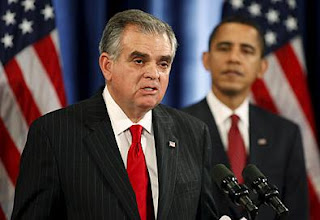 ponse to sticking gas pedals as an indication of his inclination.
"I don't think anybody thinks that Ray LaHood is not going to have strong enforcement," he said.
The rule limiting to three hours the amount of time airlines can keep passengers waiting in planes on tarmacs goes into effect on Thursday. After three hours, planes must return to a gate unless the flight's captain decides its unsafe to do so or it would interfere with airport operations. The rule also requires airlines to provide passengers with working toilets and, after two hours, food and water.
Airlines have complained that they may be forced to cancel flights, causing passengers to rebook flights and creating greater inconvenience than if they had continued to wait onboard for clearance to take off.
Last week, LaHood turned down requests from five airlines for temporary exemptions to the three-hour limit at congested New York, New Jersey and Philadelphia airports.
LaHood said Tuesday that it's important the new rule be applied consistently. He noted that the rule applies only to domestic flights and will not affect international flights.
Airlines that violate the three-hour rule are supposed to report their violations to the Transportation Department, LaHood said. If they don't, their passengers probably will, he said.
Airlines intend to comply with the three-hour limit, said Elizabeth Merida, a spokeswoman for the Air Transport Association, which represents major airlines.
"We're just not going to violate it, plain and simple," Merida said. "We do think it will lead to unintended consequences."
LaHood announced the new rule in December. Once it became clear that the Transportation Department was determined to follow through on the three-hour limit, airlines began making adjustments to their operations, Merida said.
The impetus for the new rule was a Continental Express flight that was diverted to Rochester, Minn., last August due to thunderstorms. Forty-seven passengers were kept overnight in a cramped plane because employees of another airline refused to open a gate so that they could enter the closed airport terminal.
Source: News.yahoo.com
"There will be strong enforcement," LaHood told reporters in a conference call. "I just think that has to part of our plan to make sure that passengers understand and that airlines understand we're serious about this."
LaHood sidestepped a question about whether he will seek the maximum fine against airlines that break the rule — $27,500 per passenger. But he pointed to his department's recent $16.4 million fine against Toyota for its slow res
 ponse to sticking gas pedals as an indication of his inclination.
"I don't think anybody thinks that Ray LaHood is not going to have strong enforcement," he said.
The rule limiting to three hours the amount of time airlines can keep passengers waiting in planes on tarmacs goes into effect on Thursday. After three hours, planes must return to a gate unless the flight's captain decides its unsafe to do so or it would interfere with airport operations. The rule also requires airlines to provide passengers with working toilets and, after two hours, food and water.
Airlines have complained that they may be forced to cancel flights, causing passengers to rebook flights and creating greater inconvenience than if they had continued to wait onboard for clearance to take off.
Last week, LaHood turned down requests from five airlines for temporary exemptions to the three-hour limit at congested New York, New Jersey and Philadelphia airports.
LaHood said Tuesday that it's important the new rule be applied consistently. He noted that the rule applies only to domestic flights and will not affect international flights.
Airlines that violate the three-hour rule are supposed to report their violations to the Transportation Department, LaHood said. If they don't, their passengers probably will, he said.
Airlines intend to comply with the three-hour limit, said Elizabeth Merida, a spokeswoman for the Air Transport Association, which represents major airlines.
"We're just not going to violate it, plain and simple," Merida said. "We do think it will lead to unintended consequences."
LaHood announced the new rule in December. Once it became clear that the Transportation Department was determined to follow through on the three-hour limit, airlines began making adjustments to their operations, Merida said.
The impetus for the new rule was a Continental Express flight that was diverted to Rochester, Minn., last August due to thunderstorms. Forty-seven passengers were kept overnight in a cramped plane because employees of another airline refused to open a gate so that they could enter the closed airport terminal.
Source: News.yahoo.com
Subscribe to:
Posts (Atom)